





AT Jacket vs HDPE Jacket: Which ADSS Cable Jacket Should You Choose?
Order the wrong ADSS outer jacket and a cable that passes its factory tensile test can still fail on the tower a few years later. The failure does not start with tension. It starts on the jacket surface, where the high-voltage electric field around a transmission conductor slowly breaks down ordinary polyethylene. That is why ADSS datasheets carry two jacket options: HDPE (standard polyethylene) and AT (anti-tracking polyethylene).
This guide explains what each jacket is, the mechanism that destroys a cable in a strong electric field, and how to choose between them using your line’s voltage class and hanging position. The goal is to stop two expensive mistakes: paying for AT on a low-voltage distribution line that never needed it, and specifying HDPE next to a 220 kV phase conductor.
Key Takeaways
- ADSS has two common outer jackets: HDPE (standard polyethylene) and AT (anti-tracking polyethylene).
- Industry practice: HDPE for lines below 110 كيلو فولت, AT for lines at or above 110 كيلو فولت.
- Electric tracking starts as leakage current on a wet, contaminated jacket; dry-band arcing burns carbon paths that age the jacket and the aramid beneath it.
- The right jacket depends on the electric-field strength at the actual hanging point, not only the nominal line voltage.
- Contamination level — coastal salt, industrial soot, urban dust — can force AT even on lower-voltage lines.
- Confirm the jacket type in your order data alongside span, fiber count and voltage class.
Why ADSS Jacket Material Matters More Than It Looks
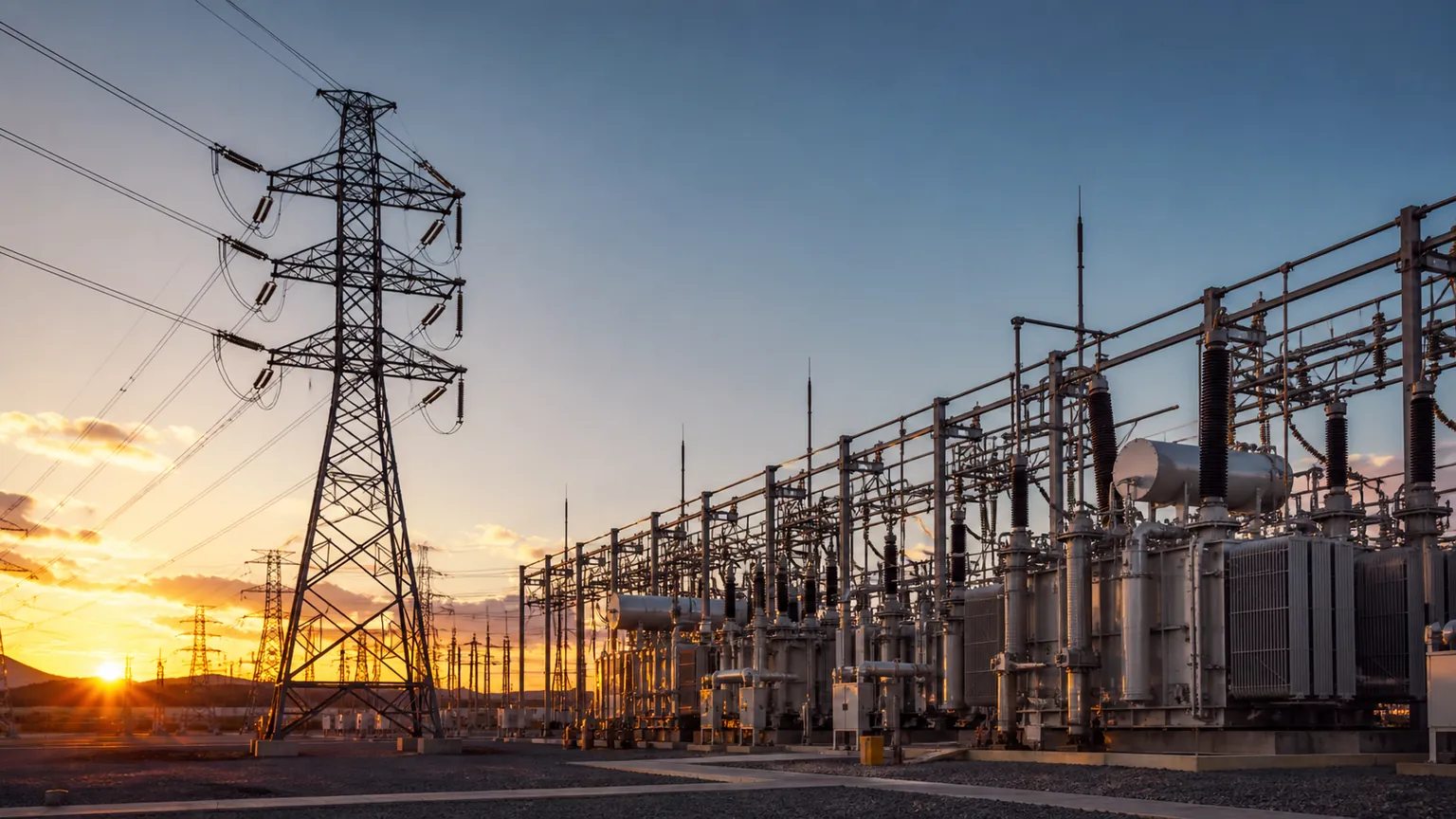
ADSS cable hangs on the same tower as live phase conductors but carries no current and no ground path — it is fully dielectric. Because it sits inside a strong alternating electric field, the jacket surface develops an induced voltage. On a dry, clean day that potential is harmless. In rain, fog, or with dust and salt on the surface, a leakage current flows across the wet jacket between points at different potential.
The jacket is the only barrier between that surface activity and the aramid strength members underneath. Once the jacket degrades, the mechanical integrity of the whole cable drops, and the failure mode is invisible from a tensile test report. A cable can leave the factory at full rated tensile strength (آر تي إس) and still lose the aramid layer to tracking years later on the line.
What Is an HDPE Jacket on ADSS Cable
HDPE (high-density polyethylene) is the standard outer sheath used on most outdoor fiber cables. It offers strong UV resistance, good weathering, solid mechanical protection, and low cost. For ADSS installed on distribution lines and lower-voltage transmission where the electric field is mild, HDPE is the sensible default and the most economical choice.
Its limitation is tracking resistance. Under sustained leakage current and repeated dry-band arcing, ordinary PE can carbonize along the surface, forming conductive tree-like tracks that deepen over time. That is why HDPE is normally specified for lines below 110 كيلو فولت, where the induced surface potential stays low enough that this process remains negligible across the cable’s service life.
What Is an AT (مكافحة التتبع) سترة
AT stands for anti-tracking. It is a specially compounded polyethylene — often mineral-filled or cross-linked — engineered to resist surface carbon tracking under high electric-field stress. AT jackets are the standard choice for ADSS strung on 110 kV and higher transmission lines, and for lines in coastal or heavy-industrial areas where contamination raises leakage current even at moderate voltage.
The trade-off is cost. AT compound is more expensive than HDPE and is only worth paying for when the field strength at the hanging point justifies it. Specifying AT everywhere quietly raises a project’s cable budget with no reliability gain on low-field spans — the same way over-specifying any material wastes money without buying performance.
How Electric Tracking Destroys an ADSS Cable
The mechanism explains the whole selection decision, so it is worth walking through step by step:
- Moisture plus dust or salt forms a conductive film on the jacket; leakage current flows between points at different induced potential.
- The current heats and evaporates water in patches, creating a dry band. When the current is forced across that dry band, it arcs.
- Dry-band arcing concentrates heat that chars the polymer into carbonized, tree-like tracks.
- The tracks deepen from the surface inward, aging the jacket and eventually reaching the aramid layer. Mechanical strength falls, and the cable risks breaking under normal wind and ice load.
Engineers reduce this risk from two directions at once: use an AT jacket that resists tracking, and calculate the tower’s electric-field distribution so the cable hangs at a low-stress point. The jacket choice and the hanging-point choice are not alternatives — a correct design uses both.
HDPE vs AT Jacket Compared for Buyers
| Attribute | HDPE Jacket | AT Jacket |
|---|---|---|
| Primary strength | الأشعة فوق البنفسجية, weathering, low cost | Resistance to electric tracking |
| Typical voltage use | Below 110 كيلو فولت | 110 kV and above |
| Relative cost | أدنى | Higher |
| Best for | Distribution lines, low-field spans | الانتقال, coastal/industrial contamination |
| Failure risk if misused | Surface tracking in high fields | Unnecessary cost on low-field lines |
Jacket Selection by Voltage Class and Environment
Nominal voltage gives you the starting point; the field environment overrides it. Use this matrix to lock the jacket before you request pricing:
| Line / Location | Environment | Recommended Jacket | Why |
|---|---|---|---|
| Below 110 كيلو فولت | Inland, clean air | HDPE | Field too low for tracking to matter |
| Below 110 كيلو فولت | Coastal / صناعي | في | Contamination raises leakage current |
| 110 kV and above | Any | في | High induced surface potential |
| Any voltage | Hung high near phase conductors | في (confirm with field calc) | Local field strength can exceed the line class |
How AT Jackets Are Verified, Not Just Claimed
Because HDPE and AT look identical, the jacket type must be proven on paper, not by eye. ADSS is designed against IEC 60794-4-20 و, on transmission lines, IEEE Std 1222, and a reputable supplier backs an AT claim with tracking-resistance type-test records and a printed meter marking on the cable. When you evaluate a quote, ask for three things: the jacket material designation, the type-test certificate covering tracking and the mechanical ratings, and confirmation that the suspension and dead-end hardware match the finished cable diameter. A vendor who cannot produce these is selling you HDPE with an AT label.
Common Specification Mistakes
Most ADSS jacket problems trace back to four ordering errors:
- Choosing the jacket from nominal voltage alone and ignoring a coastal or polluted route.
- Paying for AT on every span, including low-field distribution sections where HDPE performs identically.
- Skipping the hanging-point field calculation, so a cable rated for its voltage still sits in a local high-field spot.
- Accepting “fiber cable, إي دي إس إس” with no jacket designation on the purchase order, leaving the supplier to ship the cheaper option.

How to Specify the ADSS Jacket in Your Order
A complete ADSS order sheet locks the jacket alongside the mechanical and optical specs. Confirm all five before you sign:
- Line voltage class and the intended hanging point on the tower.
- Jacket material — HDPE or AT — matched to the field and contamination level.
- Maximum and average span, plus the rated tensile strength (آر تي إس) and operating tension ratings.
- Fiber count and fiber type (single-mode G.652D is the default for power-line communications).
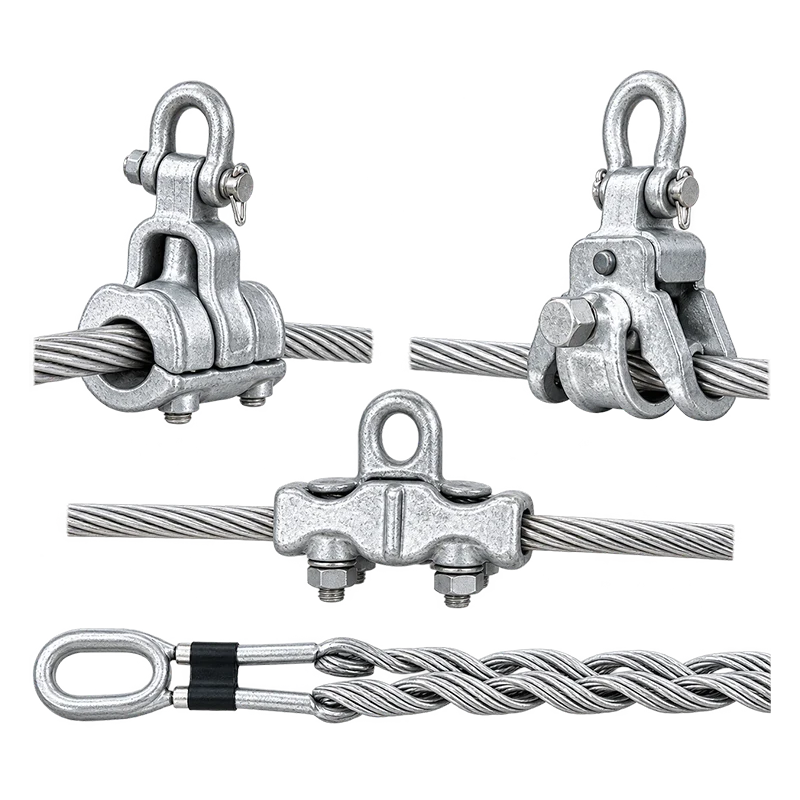
- Hardware compatibility: suspension and dead-end clamps rated for the chosen jacket diameter.
Jacket choice is a system decision that pairs with span and tension. If you are still working out the mechanical side, our companion guide on how span affects ADSS cable design covers the load inputs. For ADSS and other power-line fiber options, review the LX Cable optical fiber cable range or send your voltage class and span data for a jacket recommendation.
الأسئلة المتداولة
Is AT jacket always better than HDPE?
لا. AT only outperforms HDPE where electric-field stress and contamination make tracking a real risk. On low-voltage, clean-air distribution lines, HDPE gives the same service life at lower cost.
What is the 110 kV rule about?
It is a practical threshold. Below 110 kV the induced surface potential on ADSS is generally low enough for HDPE; at or above 110 كيلو فولت, AT is specified to resist tracking. Contamination and hanging height can override the rule.
Can I tell HDPE from AT by looking at the cable?
Not reliably. They look similar. Verify the jacket material against the printed meter markings and the supplier’s type-test certificate rather than by eye.
Does a good jacket remove the need for a hanging-point calculation?
لا. AT reduces tracking damage but does not eliminate the electric field. Best practice combines the correct jacket with a low-stress hanging point chosen from a field-strength calculation.
Which standard governs ADSS mechanical design?
اللجنة الانتخابية المستقلة 60794-4-20 covers the cable, and IEEE Std 1222 addresses ADSS on transmission lines. Ask the supplier which standard the type tests were run against.


