




Optical Fiber vs Fiber Optic Cable: What’s the Difference?
Ask for a quote on “fiber” and you can get three different products back. A procurement engineer, a telecom installer and a reseller may all say “الألياف الضوئية” while meaning a hair-thin glass strand, a finished outdoor cable, or a pre-terminated patch cord. The confusion is expensive: buyers request bare-fiber specs for a cable run, or cable specs when they only needed patch cords.
The distinction is structural. Optical fiber is the transmission medium — the glass that carries light. A fiber optic cable is the protected assembly that lets that medium survive pulling, water, crush and rodents in the field. This guide separates the two, gives the real dimensions at each level, and shows what to specify so a quote means what you think it means.
Key Takeaways
- Optical fiber is the glass core-and-cladding strand that carries light; it has almost no tensile strength on its own.
- A fiber optic cable wraps one or many fibers with strength members, buffer tubes and an outer jacket for protection.
- Standard single-mode fiber has a 9 µm core, 125 µm cladding and 250 µm coating (ITU-T G.652).
- Fiber type is chosen for optical performance; cable construction is chosen for the installation environment.
- Access networks standardise on single-mode G.652D; bend-insensitive G.657A and cable model codes (GYXTW, إي دي إس إس, drop) tell you what a cable is built for.
- Every cable contains fiber, but most projects should order finished cable, not bare fiber.
Why People Confuse Optical Fiber and Fiber Optic Cable
The industry uses “fiber” as shorthand for both the raw glass and the finished cable, and marketing often blurs them on purpose. On a datasheet the two meanings sit side by side: “fiber count” describes the cable, while “fiber type” describes the glass inside it. Separate the medium from the assembly and most spec-sheet ambiguity disappears. The rest of this article keeps the two terms distinct on purpose.
What Is Optical Fiber
Optical fiber is a strand of ultra-pure glass (sometimes plastic) that guides light along its core by total internal reflection. It has three concentric layers, each with a fixed dimension:
- Core — the light path. About 9 µm for single-mode, 50 أو 62.5 µm for multimode.
- Cladding — glass with a lower refractive index that reflects light back into the core; 125 µm across.
- Coating — a soft protective polymer layer, typically 250 µm, that shields the glass from micro-bends and moisture.
The coated fiber is 250 µm across — a quarter of a millimetre — and yet has almost no tensile strength. Pull it, bend it past its limit, or let it press against a duct edge and it cracks. Bare fiber is only handled inside a controlled environment or fed straight into a cabling line; it is never installed on its own.
What Is a Fiber Optic Cable
A fiber optic cable is the engineered product that makes fragile fiber installable. Around the fibers it adds structure, each layer solving a specific field problem:
- Buffer or loose tubes — house one or many fibers with spare “excess length” so tension and temperature changes never reach the glass.
- Strength members — aramid yarn (Kevlar), fiberglass rods (فرب) or a central dielectric that carry the pulling load.
- Water-blocking and armour — swelling tape, gel or steel wire for buried, duct or rodent-prone routes.
- Outer jacket — PE, LSZH or specialty compounds for UV, طقس, fire or tracking resistance.
The cable is what you order for an outside-plant run; the fiber is one specification buried inside it. For the physics of how light travels through the assembly, see our guide on how optic fiber cable works.
Optical Fiber vs Fiber Optic Cable: Key Differences
| Aspect | Optical Fiber | كابل الألياف الضوئية |
|---|---|---|
| What it is | The glass transmission medium | A protected assembly of fibers + قوة + jacket |
| Handles pulling load | No — cracks under tension | Yes — aramid/FRP carry the load |
| Specified by | Fiber type (G.652, OM3/OM4) | بناء, fiber count, jacket, environment |
| Typical buyer need | Cable factories, splicing/termination | Outside-plant and in-building installs |
| Sold as | Spools of bare/coated fiber | Drums of finished cable by the kilometre |
Single-Mode vs Multimode Fiber
The fiber type is fixed at the drawing tower and defines what the cable can ultimately do. Two broad families cover almost every purchase — single-mode and multimode:
| Property | Single-mode (G.652D) | Multimode (OM3/OM4) |
|---|---|---|
| Core diameter | ~9 µm | 50 µm |
| Reach | Kilometres to hundreds of km | Up to a few hundred metres |
| Light source | Laser | VCSEL / LED |
| Typical use | Telecom, FTTH, power-line comms | Data centre, LAN backbones |
For outside-plant and access work the default is single-mode G.652D. Multimode belongs to short in-building runs where cheaper optics matter more than distance. Choosing the wrong family is a design error no amount of good cabling can undo.
Communication Fiber Types: G.652D and the ITU-T Families
Within single-mode, the ITU-T assigns letter designations that tell you how the fiber behaves and where it belongs. For a buyer, the practical point is that “وضع واحد” is not one product — the wrong sub-type can raise cost or break a link budget. The table below covers the types you will actually see quoted:
| Designation | Category | Best suited for |
|---|---|---|
| G.652D | Standard single-mode, low water peak | The access/telecom default — FTTH, metro, power-line comms |
| G.657A1 / A2 | Bend-insensitive single-mode | FTTH drop and in-building routing around tight corners |
| G.654E | Cutoff-shifted, low-loss | Long-haul terrestrial and high-capacity 400G routes |
| G.655 | Non-zero dispersion-shifted | DWDM long-haul networks |
| OM3 / OM4 | Laser-optimized multimode (50 µm) | Data-centre 10/40/100G short-reach links |
| OM5 | Wideband multimode | 400G SR and wavelength-division multimode |
If a supplier quotes “وضع واحد” without the letter, ask for it. G.652D and G.657A are compatible enough to splice together in an access network, but pricing and bend performance differ, and long-haul designs can quietly demand G.654E.
From Bare Fiber to Finished Cable
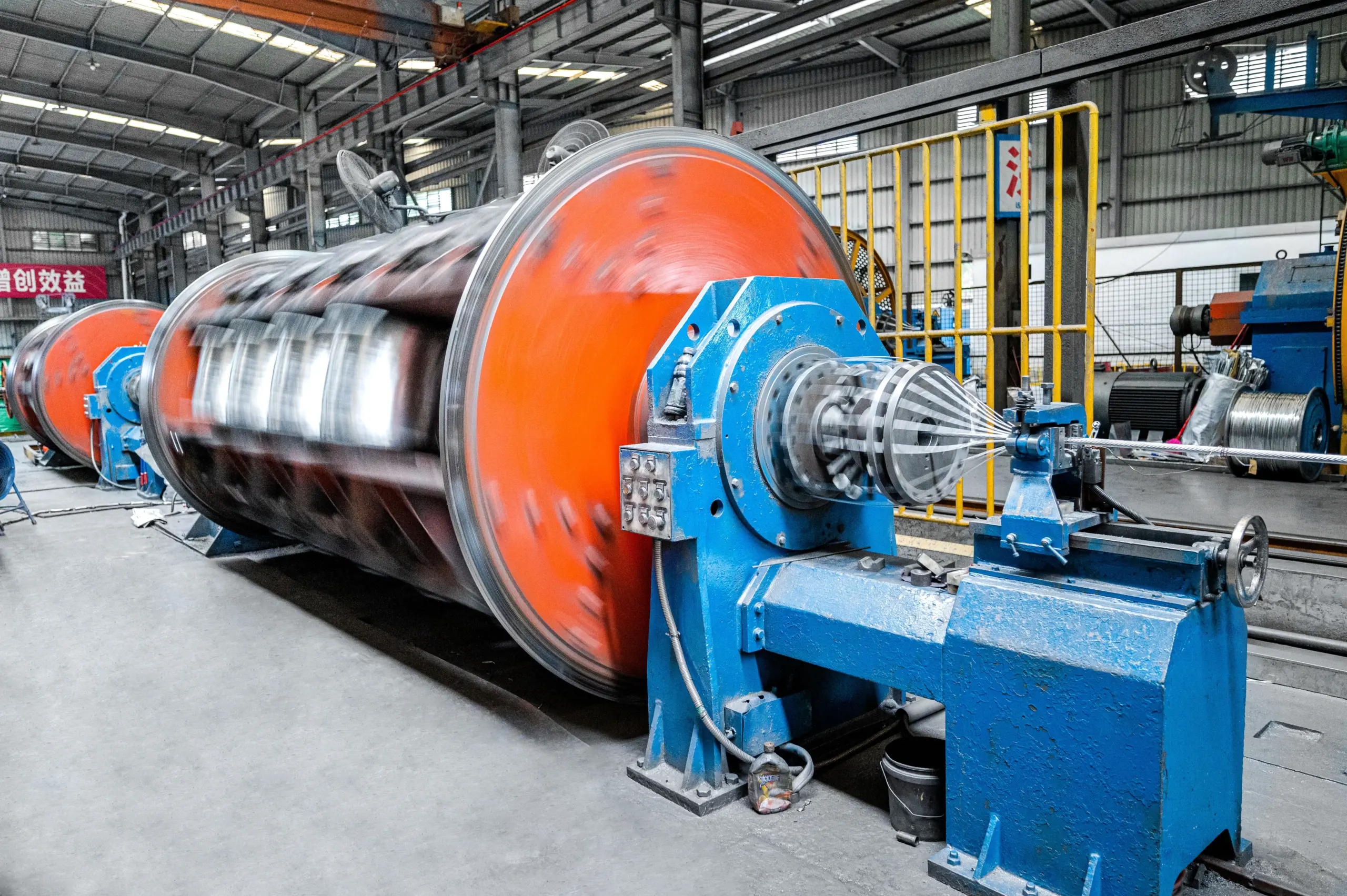
The manufacturing chain makes the relationship concrete. Drawn glass gets a primary coating, then fibers are grouped into loose tubes with gel and excess length, tubes are stranded around a central strength member, aramid is applied, and the outer jacket is extruded. Each stage adds protection, not optical capability — the fiber type was locked at the tower. That is why a supplier can offer the same G.652D fiber in a duct cable, an aerial self-supporting cable, or an indoor LSZH riser: the glass is identical, the cable is built for the environment.

Fiber Optic Cable Types and Model Codes
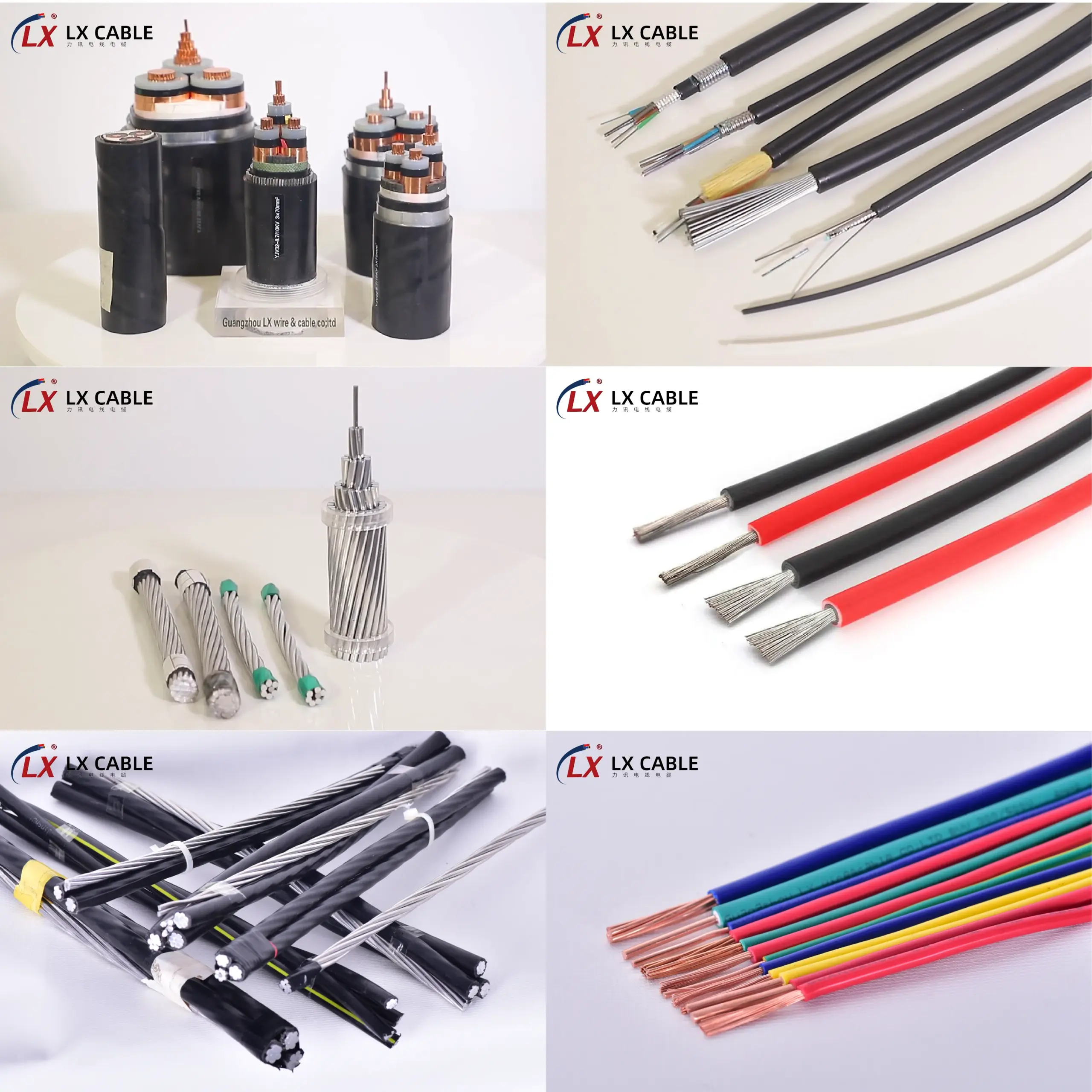
Cable models are named by what they are built to survive. Many suppliers use the common industry / GB designation where GY means outdoor communication cable and GJ means indoor, with following letters and numbers encoding the strength member, filling, jacket and armour. Reading the code tells you the intended route at a glance:
| نموذج / type | بناء | Typical use |
|---|---|---|
| GYXTW | Central loose tube, gel-filled, corrugated steel-PE jacket | Duct and aerial distribution |
| GYTA | Layered loose tubes, aluminium-PE sheath | Duct, cable ladder, هوائي |
| GYTA53 / GYTS | Steel-tape armoured outer sheath | Direct burial, rodent-prone ground |
| إي دي إس إس | All-dielectric self-supporting, aramid strength | Aerial on power towers, no ground path |
| OPGW | Optical ground wire, aluminium-clad steel | Transmission-line earth wire plus comms |
| GYFTY / figure-8 | Non-metallic, self-supporting messenger | Aerial distribution along poles |
| FTTH drop (butterfly / flat) | 1–4 core, bend-insensitive G.657 | Last connection into the home |
| GJ indoor riser / LSZH | Tight-buffer, flame-retardant low-smoke jacket | In-building riser and equipment cabling |
The same G.652D fiber sits inside almost all of these; the model number is about the jacket and strength member, not the glass. That is exactly the distinction this article opened with — choose the fiber type for the optical job, then the cable model for the route.
Where the Confusion Causes Ordering Errors
Three scenarios recur on real purchase orders:
- “24-core fiber” with no construction. That fixes the fiber count but says nothing about jacket, strength member or route — the supplier can ship almost anything.
- Bare fiber ordered for an install. Someone buys spools of coated fiber to pull through duct; it snaps on the first bend because nothing is carrying the tension.
- Indoor cable used outdoors. An LSZH riser cable has no UV resistance and fails in sunlight; the fiber inside is fine, the jacket was built for a different job.
What Buyers Should Specify at Each Level
Split your requirement into two sentences and most ordering errors disappear:
- Fiber level: single-mode G.652D for long-haul and access, or multimode OM3/OM4 for short in-building runs. State the fiber count.
- Cable level: طريقة التثبيت (قناة, هوائي, buried, indoor) and matching model code (GYXTW, GYTA53, إي دي إس إس, drop), jacket (PE for outdoor, LSZH for indoor), armour if rodents or crush risk apply, and span or pull-tension limits.
A complete specification protects the fiber inside the cable. If a quote only says “fiber cable, 24 core,” push back until the construction, jacket and environment are named. Browse LX Cable optical fiber cable options or send your route conditions for a construction recommendation.
الأسئلة المتداولة
Are “الألياف الضوئية” و “fiber optic cable” the same thing?
لا. Optical fiber is the glass strand that carries light; a fiber optic cable is the finished, protected assembly that contains one or many fibers plus strength members and a jacket.
Can I install bare optical fiber by itself?
لا. Bare fiber has almost no tensile strength and fails under bending and pulling loads. It must be housed inside a cable that carries the mechanical stress.
What does “24-core fiber cable” mean?
It describes the cable, not the glass: the cable contains 24 individual optical fibers. The fiber type (على سبيل المثال, single-mode G.652D) is a separate specification.
Which fiber type should I choose?
Single-mode G.652D for telecom, FTTH and any long run; multimode OM3/OM4 for short in-building and data-centre links where lower-cost optics matter more than distance.
Which should I order for a project — fiber or cable?
Almost always finished cable. You order bare fiber only if you are cabling it yourself in a factory. For any duct, aerial or in-building install, specify a cable construction built for that environment.
What do cable model codes like GYXTW or ADSS mean?
They describe the cable construction, not the fiber. GY means outdoor communication cable and the following letters encode the strength member, filling and jacket; ADSS and OPGW name aerial power-line designs. The code tells you which route the cable is built for.


