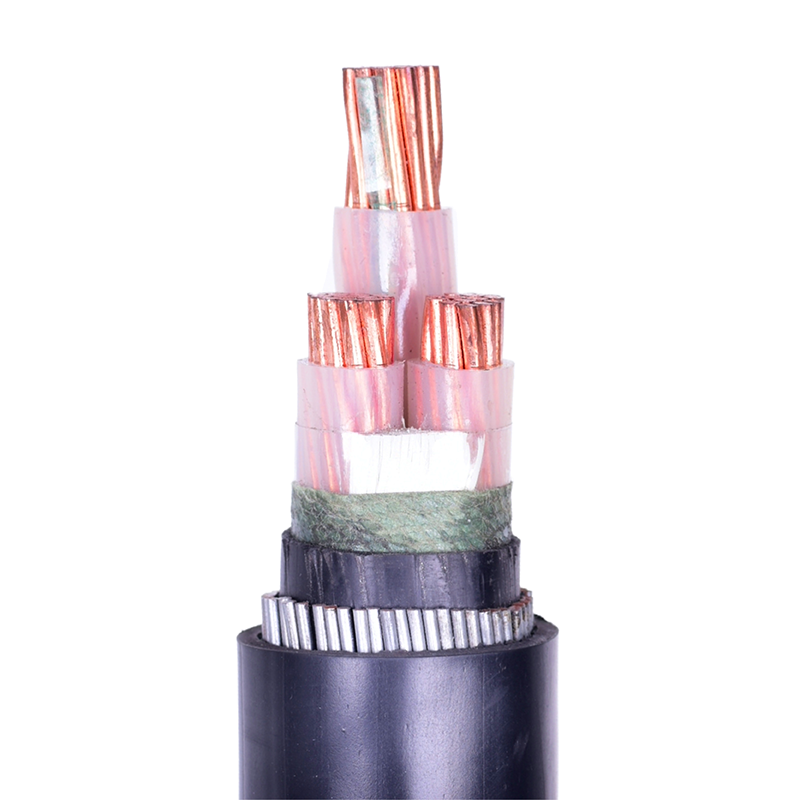





Copper vs Aluminum Medium Voltage Cables
Project buyers comparing copper vs aluminum medium voltage cable usually meet the price gap before they meet the engineering trade-offs. The London Metal Exchange closed copper at USD 6.61 per pound in late October 2026, about USD 14,570 per tonne — 4.7 times the aluminum price of USD 3,094 per tonne.
Both metals stay fully standard in the IEC (اللجنة الكهروتقنية الدولية) 60502-2 construction for rated voltages from 3.6/6 kV up to 19/33 كيلو فولت, so the choice is commercial, not a compliance question. This guide runs the sizing math, installed-cost arithmetic and jointing facts that decide which conductor fits your project. كابل ال اكس manufactures both CU/XLPE and AL/XLPE medium voltage power cables, and this guide reflects the trade-offs behind both product families.
الوجبات السريعة الرئيسية
- Copper conducts at 100% IACS (International Annealed Copper Standard); aluminum conducts at about 61%, so equal resistance needs roughly 1.6 times the aluminum cross section.
- At equal resistance, aluminum still weighs about half of copper: 2.70 g/cm³ against 8.96 جم/سم3.
- LME prices in October 2026: copper at about USD 14,570 per tonne, aluminum at USD 3,094 — a 4.7-to-1 gap by weight.
- Raw conductor metal for 1 km of 240 mm² copper costs about USD 31,300; the resistance-matched 400 mm² aluminum core costs about USD 3,340.
- The standard IEC adiabatic constants for XLPE (البولي إيثيلين المتقاطع) put same-size copper about 1.5 times ahead on short-circuit current: k = 143.6 مقابل 94.5 A·s½/mm².
- Aluminum terminations need oxide-penetrating paste, pressure-controlled lugs and bimetallic connectors at copper interfaces.
- MV conductors follow IEC 60228 classes — aluminum normally Class 2 stranded — inside the IEC 60502-2 cable build.
Copper vs Aluminum Medium Voltage Cable Properties
Copper wins every engineering property in the table below except weight and price; aluminum turns those two losses into system-level advantages. Reading the properties side by side explains why utility networks standardize on aluminum while mines, tunnels and high fault-level industrial plants stay with copper. None of these numbers is marginal; each one changes cable diameter, jointing kit, or transport plan.
| ملكية | نحاس | الألومنيوم | What it means for buyers |
|---|---|---|---|
| الموصلية الكهربائية (IACS) | 100% | 61% | Aluminum needs about 1.6 times the cross section |
| Density | 8.96 جم/سم3 | 2.70 جم/سم3 | Equal-resistance aluminum weighs about half |
| Thermal expansion | 17 µm/m·°C | 23 µm/m·°C | Aluminum joints relax about 35% more per heat cycle |
| Melting point | 1,085 درجة مئوية | 660 درجة مئوية | Copper holds more fault-heating margin |
| Short-circuit constant, XLPE | 143.6 A·s½/mm² | 94.5 A·s½/mm² | Same-size copper carries about 1.5 times the fault current |
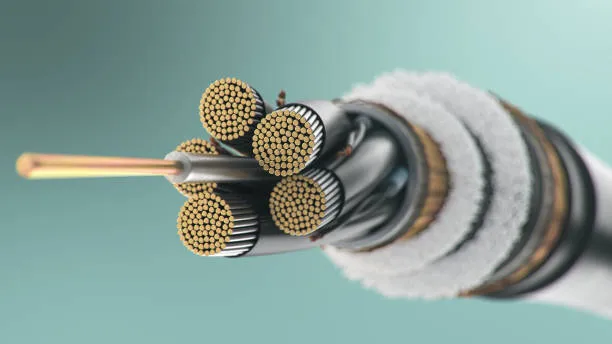
Treat any supplier quote for “same-size” aluminum as a red flag. Resistance at equal cross section jumps about 64%, which pushes conductor temperature past design limits at rated load. A competent manufacturer answers a copper-to-aluminum substitution with a full size recalculation, not a price discount.
Why Aluminum Conductors Need Larger Cross Sections
Aluminum conductor alloy 1350 carries about 61% of the IACS conductivity reference used for annealed copper. The fix is simple geometry: multiply the copper cross section by 1.6 and round up to the next IEC 60228 standard size (the conductor standard behind every insulated cable). أ 95 mm² copper conductor becomes 150 mm² aluminum; أ 240 mm² copper core becomes 400 مم².
| Copper size (اللجنة الانتخابية المستقلة 60228) | Aluminum equivalent | Metal weight per km |
|---|---|---|
| 50 مم² | 80 مم² | 216 kg vs 448 كجم |
| 95 مم² | 150 مم² | 405 kg vs 851 كجم |
| 120 مم² | 185 مم² | 500 kg vs 1,075 كجم |
| 150 مم² | 240 مم² | 648 kg vs 1,344 كجم |
| 185 مم² | 300 مم² | 810 kg vs 1,658 كجم |
| 240 مم² | 400 مم² | 1,080 kg vs 2,150 كجم |
The weight column is where aluminum engineers its comeback. Every matched pair in the table carries roughly equal resistance, yet the aluminum core weighs 46 ل 50% of its copper twin. Multiply that ratio across a full container order and the difference shows up in freight, crane time and unloading crews.
The same physics rules small-gauge building wire; ال differences between aluminum and copper wire at low voltages follow the identical conductivity and weight logic.
Weight and Installation Advantages of Aluminum
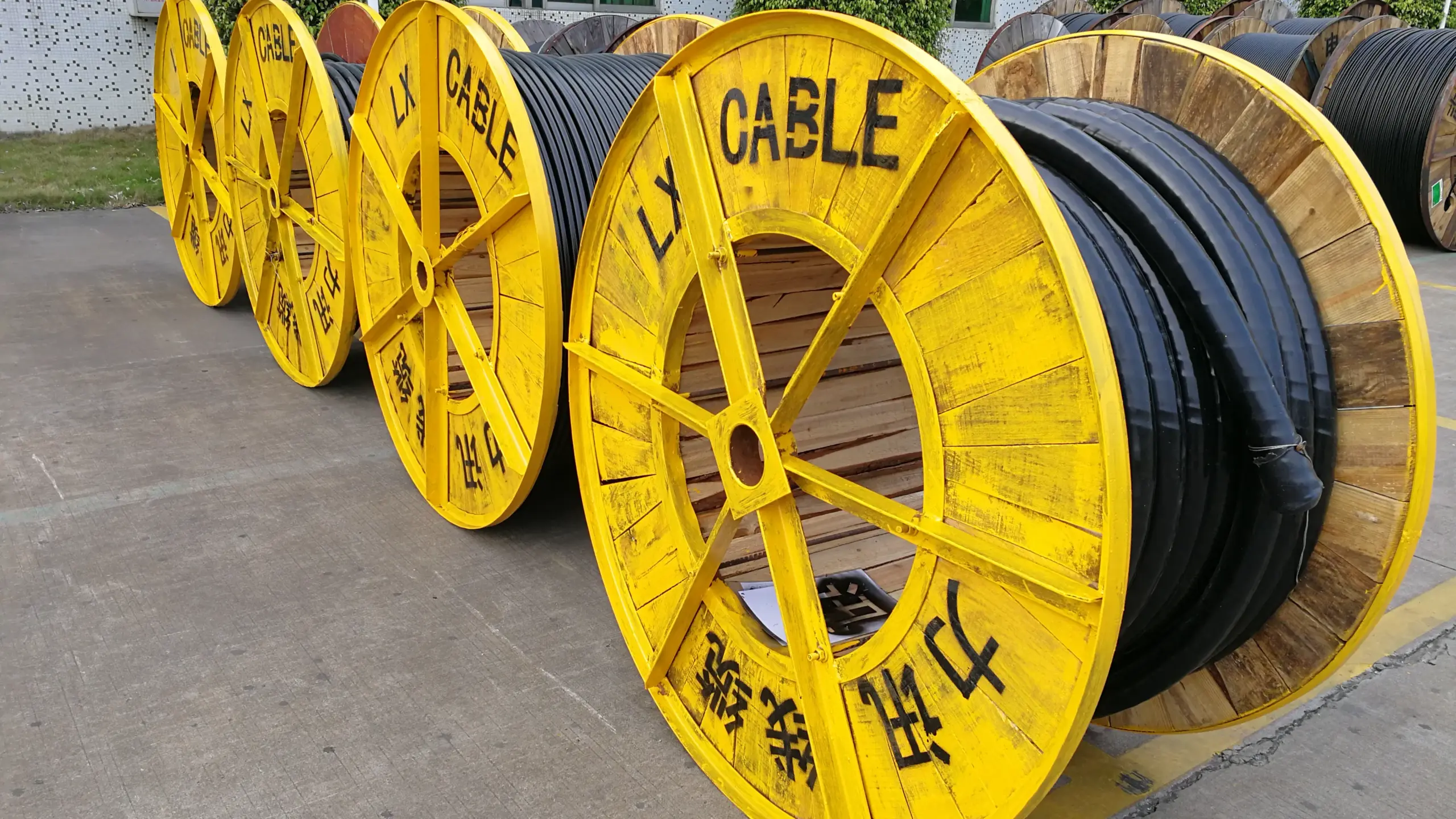
An aluminum medium voltage cable at equal resistance weighs about half of its copper equivalent, and the advantage compounds across a project. Lighter drums need smaller cranes, fewer lifting points and less reinforced transport. On distribution projects across East Africa, many sites lack heavy lifting gear. There, drum weight decides whether a crew finishes a pull in an afternoon or a week.
Lower density also buys route length: a standard steel drum holds more metres of resistance-matched aluminum than of copper, which cuts joint bays and drum swaps along the line. Fewer joints mean fewer potential fault points and a shorter installation schedule.
Aluminum also removes the theft incentive that plagues copper in many utility corridors, because scrap resale value drops to a fraction. The trade-offs are real: the bigger aluminum cross section grows drum diameter, minimum bending radius and duct occupancy, and the softer metal needs care against surface damage during pulls. Site crews should confirm trench width, duct sizes and bending radius against the aluminum design before committing to a substitution.
Copper vs Aluminum Medium Voltage Cable Cost
Metal price dominates the copper vs aluminum medium voltage cable cost debate because the conductor is the single largest cost item in the cable build. ال London Metal Exchange set copper at about USD 14,570 per tonne in late October 2026, against USD 3,094 for aluminum. That 4.7-to-1 weight gap then multiplies with the 1.6-times sizing rule, so the two materials land in completely different cost leagues.
| متري (per km) | 240 mm² copper | 400 mm² aluminum |
|---|---|---|
| Conductor metal weight | عن 2,150 كجم | عن 1,080 كجم |
| LME price, October 2026 | USD 14,570 per tonne | USD 3,094 per tonne |
| Raw conductor metal cost | About USD 31,300 | About USD 3,340 |
| Resistance at 20 درجة مئوية | Baseline | A few percent lower |
Raw metal is the whole story at this zoom level, but finished cables narrow the gap because insulation, شاشة معدنية, armour and sheath cost similar amounts for both designs. The arithmetic above covers raw conductor metal only, not the finished cable price. Expect finished aluminum MV cable to land well below copper per metre, with the exact spread moving as LME prices move.
For the wider cost picture beyond the conductor, the LX Cable guide to power cable procurement costs covers freight, duties and payment terms.
Price timing matters as much as metal choice in 2026. Copper touched an all-time high of USD 6.85 per pound in September 2026, and cable quotes age fast at these levels. Ask suppliers to state the conductor metal basis and its validity window on every quotation; a month-old MV cable price is already stale.
Need Copper or Aluminum MV Cable for Your Project?
LX Cable manufactures CU/XLPE and AL/XLPE medium voltage power cables from 3.6/6 كيلو فولت ل 19/33 كيلو فولت, with copper and aluminum conductors sized to your load, route and fault data. Send your project schedule and get a conductor-matched quotation with the metal basis stated in writing.
Termination, Jointing and Corrosion Risks
Aluminum’s engineering weaknesses concentrate at the connections, not in the conductor. Fresh aluminum surface forms an oxide film within minutes, and that film melts near 2,000 °C while the metal below melts at 660 درجة مئوية. Every aluminum termination needs wire brushing, oxide-penetrating jointing paste and controlled crimp or bolt pressure to bite through the film.
Two more failure modes deserve space on the checklist. Aluminum creeps under constant bolted pressure, so termination kits use spring washers and demand a re-torque at planned maintenance intervals. Where aluminum meets copper in damp environments, galvanic action corrodes the aluminum side; bimetallic transition connectors isolate the two metals.
Copper terminations forgive more: higher creep resistance, gentler oxide behavior and simpler hardware. In service, almost every aluminum MV cable failure traces to workmanship at a joint, not to the conductor itself. Crews trained on aluminum-compatible kits close most of that gap before energization, which makes installer training part of the material decision.
Which Conductor Fits Your Project
For long-run MV distribution, the core business of the utilities and EPC contractors LX Cable serves, aluminum is the default choice. It hits the lowest installed cost, halves transport weight and removes the copper theft variable. Copper earns its premium in three situations: constrained routes, high fault levels, and terminations that demand maximum compactness.
| Project scenario | Better conductor | Reason |
|---|---|---|
| Long utility MV distribution runs | الألومنيوم | Half the metal weight, far lower raw metal cost |
| Mines, الأنفاق, compact duct banks | نحاس | Smallest cross section per ampere |
| High fault-level industrial networks | نحاس | عن 1.5 times the short-circuit rating per size |
| Theft-prone overhead corridors | الألومنيوم | Removes the copper resale incentive |
| Retrofit through fixed duct sizes | نحاس | Smaller outside diameter fits existing routes |
| Budget-driven EPC tenders | الألومنيوم | Largest landed-cost saving at 2026 metal prices |
Both designs sit in the LX Cable portfolio as finished products: the CU/XLPE and AL/XLPE families cover unarmoured builds plus STA (steel tape armour) and SWA (steel wire armour) options. Match the conductor to the scenario table first, then let the armour and sheath follow the installation method.
خاتمة
The copper vs aluminum medium voltage cable decision comes down to three numbers: 61% الموصلية, half the weight, and a 4.7-to-1 metal price. Aluminum wins long distribution runs on cost and logistics; copper wins where space, fault levels or route constraints change the math. Neither choice forgives sloppy joints, so budget for termination discipline either way.
- Run the 1.6-times sizing rule first: resistance-matched aluminum beats copper raw metal cost by about 9 ل 1 at October 2026 LME levels.
- Check the mechanical footprint: duct occupancy, drum diameter and bending radius all grow with the aluminum cross section.
- Spec the jointing kit with the cable: aluminum-rated lugs, oxide-penetrating paste, spring washers and bimetallic connectors belong in the same purchase order.
- Lock the metal basis in writing: 2026 copper prices move too fast for open-ended quotations.
For a deeper decision framework, the LX Cable guide to choosing the right medium voltage cable for demanding industrial environments covers insulation, armour and voltage selection step by step. Send your load profile, route length and fault data for a conductor-matched quotation.
الأسئلة المتداولة
Is aluminum medium voltage cable cheaper than copper?
نعم, and by a wide margin at 2026 metal prices. Resistance-matched raw conductor metal for aluminum runs roughly one-tenth of copper: about USD 3,340 against USD 31,300 per km at October 2026 LME rates. Finished cable prices narrow that gap because insulation, screen and sheath costs are similar for both designs.
Can I replace a copper MV cable with aluminum at the same size?
لا. Aluminum at the same cross section carries about 64% higher resistance, which overheats the conductor at rated load. Match resistance instead: multiply the copper size by 1.6 and round up to the next IEC 60228 مقاس, then recheck ducts, bending radius and terminations.
Do aluminum cable terminations need special hardware?
نعم. Use aluminum-rated compression lugs, oxide-penetrating jointing paste and spring washers that hold pressure against creep. Any aluminum-to-copper interface needs a bimetallic transition connector to stop galvanic corrosion, and crews should re-torque bolted joints at planned intervals to keep clamping force stable.
Which standards govern copper and aluminum MV cables?
اللجنة الانتخابية المستقلة 60228 defines conductor classes and resistances; aluminum MV cores are normally Class 2 الذين تقطعت بهم السبل. اللجنة الانتخابية المستقلة 60502-2 covers the complete medium voltage cable construction for rated voltages from 3.6/6 kV up to 19/33 كيلو فولت, including XLPE insulation systems and metallic screens.
Which conductor lasts longer in service?
Both deliver the specified XLPE design life, عادة 30 سنين, when joints are made correctly. Service records show aluminum MV failures concentrate at badly executed terminations rather than conductor aging, so workmanship quality, not the metal choice, decides realized lifespan on most networks.