







From Optical Fiber to FTTH: Building a Complete Fiber Access Network
A finished FTTH network delivers gigabit service to a home over one thin cable. Behind that simplicity sits a supply chain of very specific parts: glass fiber, cabling in three tiers, distribution enclosures, passive splitters and termination hardware, each chosen against a loss budget and a homes-passed target. Buyers who order “fiber for FTTH” without mapping that chain end up with mismatched components and rework.
This walkthrough follows the signal from a strand of optical fiber to a home ONT, and names the equipment a project buyer actually has to source at each stage — so the bill of materials is engineered, not guessed.
Key Takeaways
- FTTH runs on a Passive Optical Network (PON): one fiber from the OLT is shared to many homes through unpowered splitters.
- The outside plant splits into three cable tiers — feeder, distribution and drop — each with different fiber counts and constructions.
- Typical PON split ratios are 1:32 или 1:64; GPON (ITU-T G.984) and XG-PON (G.987) are the dominant standards.
- The optical loss budget (Class B+ is about 28 dB) governs how far and how many splits a design can carry.
- Single-mode G.652D is the access default; drop cables often use bend-insensitive fiber for indoor routing.
- A complete FTTH bill of materials spans cable, ODN enclosures, splitters, closures and drop/termination hardware.
How a Fiber Access Network Is Built
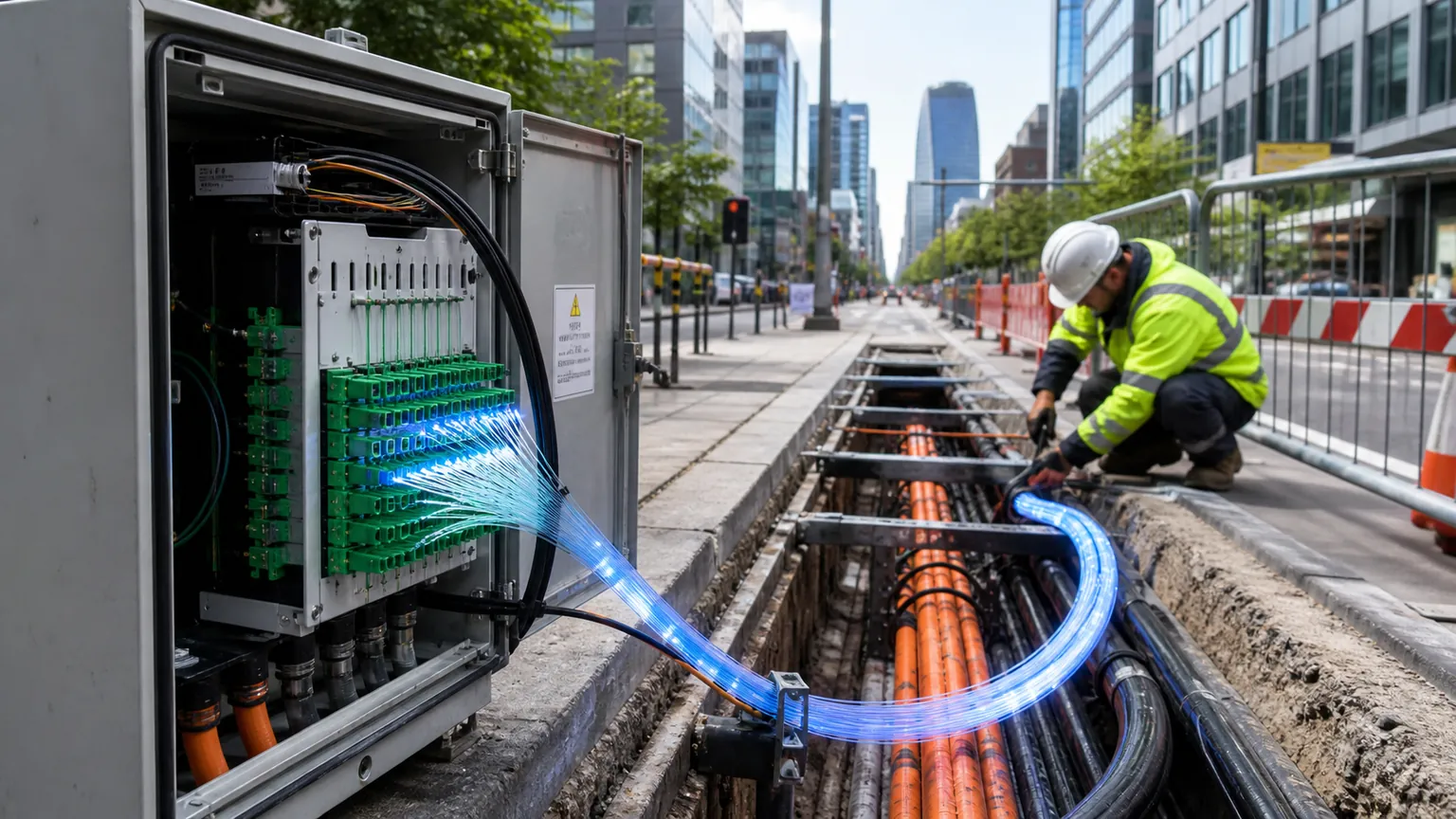
An access network has one job: carry service from the operator’s central office to many end points as cheaply and reliably as possible. Instead of running a dedicated fiber to every home, FTTH shares one fiber from the office out to a neighborhood, then splits it. Everything downstream of the split is passive glass and plastic — no powered electronics in the street cabinet — which is why maintenance cost stays low. The physical network divides into three layers: the feeder plant, the distribution plant, and the drop into the premises.
From Glass Preform to Optical Fiber
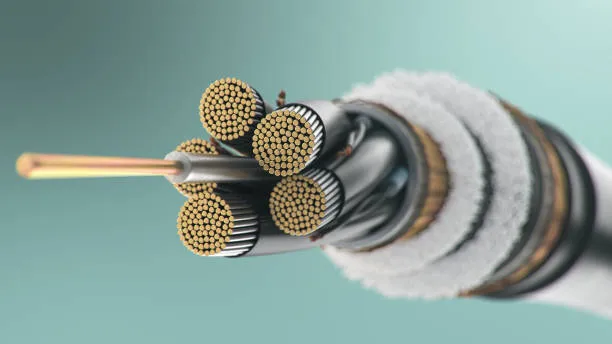
It starts as a silica preform drawn into a hair-thin strand. For FTTH the fiber is single-mode, almost always ITU-T G.652D — a 9 µm core, 125 µm cladding, 250 µm coating — chosen for low attenuation and bend tolerance at access distances. At this stage the fiber cannot be installed. It is grouped into loose tubes with excess length so that later pulling and temperature swings never put tension on the glass. The fiber type is fixed here; every decision downstream protects it or routes it, but cannot change its optical behaviour.
Building the Optical Distribution Network (ODN)
The ODN is the passive infrastructure between the OLT and the homes, and it is where most of a project’s cable and hardware spend sits. It is built in tiers, each with a different job:
- Feeder cable — high fiber count (for example 48–288) from the central office to a street or building cabinet.
- Distribution cable — medium counts fanning out from the cabinet to neighborhood access points.
- Drop cable — 1–4 fiber, often self-supporting or figure-8, from a pole or wall to the home.
- Enclosures and closures — ODF in the office, FDB/FAT in the cabinet, dome or in-line splice closures at every joint.
The Three ODN Cable Tiers Compared
| Tier | Runs from → to | Typical fiber count | Common construction |
|---|---|---|---|
| Feeder | Office → cabinet | 48–288 | Loose-tube, duct or armoured |
| Distribution | Cabinet → access point | 12–48 | Loose-tube, aerial or duct |
| Drop | Pole/wall → home | 1–4 | Self-supporting / figure-8, bend-insensitive |
Key FTTH Components and Their Roles
| Component | Where it sits | Role |
|---|---|---|
| OLT | Central office | Active endpoint serving many ONTs over one fiber |
| ODF | Office / cabinet | Frames, splices and patches the feeder fibers |
| PLC splitter | Cabinet / closure | Divides one signal to 1:32 или 1:64 outputs, unpowered |
| FDB / FAT | Building / street | Distribution box terminating drops to homes |
| Splice closure | Pole / duct joint | Protects fused joints in the outside plant |
| ONT / ONU | Subscriber home | Converts the optical signal to customer Ethernet/Wi-Fi |
PON Architecture: How One Fiber Serves Many Homes
The economics of FTTH rest on the point-to-multipoint PON. A single feeder fiber leaves the OLT, hits a PLC splitter in a cabinet, and fans out to dozens of homes. Common split ratios are 1:32 и 1:64. GPON (ITU-T G.984) typically delivers 2.5 Gbps downstream shared across the split; XG-PON (G.987) raises that to 10 Gbps. Because the splitter and all cabling between OLT and ONT are passive, there is no powered equipment to maintain in the street. The whole design trade-off therefore becomes an optical loss budget rather than a power one.
The Typical FTTH Deployment Path
Trace one home’s connection end to end:
- An OLT port in the central office patches through the ODF onto a feeder cable.
- The feeder runs to a street cabinet, splices into a distribution cable, and passes through a PLC splitter.
- Distribution reaches a building FAT or pole closure; a drop cable is pulled to the home.
- The drop terminates at a wall box and the ONT, which hands service to the customer’s router.
The Loss Budget That Limits Everything
Every joint and patch on that path consumes optical margin. A fusion splice adds roughly 0.1 dB, a connector pair around 0.3–0.5 dB, and a 1:64 splitter tens of dB. The design must keep the total inside the PON class budget — Class B+ is about 28 dB, and longer-reach classes allow more. This single number decides your maximum logical reach (around 20 km for typical GPON), how many splits you can cascade, and how much cable you can run between the office and the farthest home. Fiber type, cable construction and splitter choice stop being separate purchases and become one engineered system constrained by that budget.
What Project Buyers Need to Plan
Before ordering, lock these inputs so the bill of materials is coherent:
- Target homes passed and the split ratio — they set fiber counts and splitter quantities.
- Route type per tier — duct, aerial or buried — which sets each cable’s construction and jacket.
- Optical reach and loss budget — distance and splits must fit the chosen PON class.
- Termination and enclosure points — ODF, FDB/FAT, closures and drop hardware in matching counts.
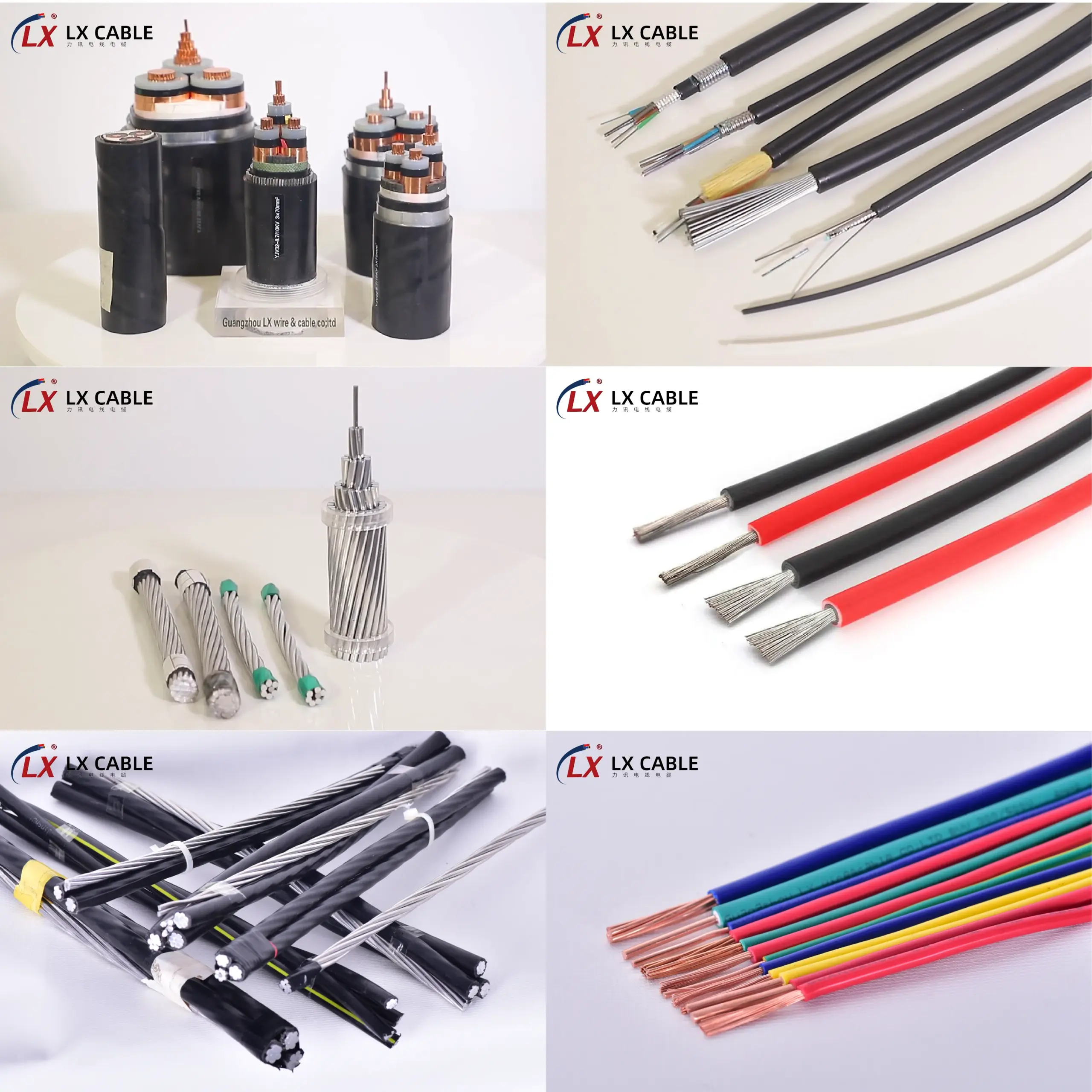
LX Cable supplies FTTH and access cabling — feeder, distribution and drop — alongside the wider optical fiber cable range. Send your homes-passed target and route conditions for a matched bill of materials.
Часто задаваемые вопросы
What is the difference between FTTH and FTTB?
FTTH runs fiber all the way into each home to an ONT. FTTB stops fiber at the building basement or cabinet and uses copper for the last stretch. FTTH gives higher bandwidth and lower long-term maintenance.
Why are PON splitters passive?
A PLC splitter divides light optically with no power or electronics. That removes the need for powered equipment in street cabinets, cutting energy cost and failure points across the access network.
Which fiber type is standard for FTTH?
Single-mode ITU-T G.652D is the access-network default, valued for low attenuation and bend tolerance. Drop cables often use bend-insensitive fiber for tight indoor routing.
How far can a GPON link reach?
Typical GPON logical reach is around 20 km with a Class B+ loss budget near 28 dB. Actual distance depends on split ratio, cable loss and the number of splices and connectors in the ODN.
What parts make up a FTTH bill of materials?
Feeder, distribution and drop cable; ODF and FDB/FAT enclosures; PLC splitters; splice closures; and drop-termination hardware plus the ONT at the home. Quantities follow the homes-passed target and split ratio.


